
Retired law enforcement officers are increasingly using LinkedIn to transition into civilian careers. It’s a powerful platform for showcasing transferable skills, building professional networks, and finding roles in industries like security, investigations, and consulting. With 95% of recruiters using LinkedIn, it’s a key tool for job searches.
By combining LinkedIn with specialized platforms like OfficerList, retired officers can expand their opportunities and successfully transition into new careers.
Retired law enforcement officers are increasingly turning to LinkedIn as they navigate the transition to civilian careers. With a massive user base of 830 million people, the platform provides a unique opportunity for retired officers to connect with potential employers and explore new career paths. In fact, LinkedIn has become a critical tool, with 95% of recruiters worldwide relying on it for hiring.
The numbers reflect a growing trend of retirees rejoining the workforce. Recent data reveals that 12% of retirees aged 62 to 85 plan to return to work this year, while one-quarter have already done so. Among these, "ex-police officers" have emerged as the top search category on All Police Jobs, generating nearly 7,000 searches in the last month alone. This shift highlights the increasing role LinkedIn plays in helping retired officers explore new opportunities.
Retired officers are finding success in a variety of fields, leveraging LinkedIn to connect with roles that align with their skills and interests. Popular career paths include security, investigations, consulting, and education. Many retired officers transition into positions such as criminal justice instructors, private investigators, and security consultants. Others are branching into newer areas like cybersecurity and claims investigation.
Dr. David "Lou" Ferland, a retired police chief and now a criminal justice instructor at Southern New Hampshire University, sheds light on why these roles are so appealing:
"Many (retired officers) will take up lighter, criminal justice-affiliated careers such as court security, consulting, teaching, federal security jobs or private investigations. These jobs offer a change of pace and usually far less work hours than what they were doing full time as a police officer."
Retirement also provides the flexibility to pursue long-deferred interests. As Dr. Ferland explains:
"Retirement allows you the freedom to pursue something that you might have put off during your police career, and now you find time and some steady retirement money to chase that next dream."
The specialized skills officers develop during their law enforcement careers – like risk assessment, crisis management, and investigation – are highly valued in these roles. By showcasing these competencies on their LinkedIn profiles, retired officers position themselves as strong candidates for civilian jobs.
Digital platforms like LinkedIn have transformed networking for retired officers, offering opportunities far beyond the traditional circles of law enforcement. Mike Bires, a former officer and social media manager, highlights this shift:
"LinkedIn is the ultimate tool for networking police officers."
LinkedIn serves multiple purposes, from building professional connections to job recruitment. For retired officers, it’s an essential platform to establish a personal brand, connect with industry professionals, and explore potential employers. The global reach of LinkedIn allows them to interact with hiring managers, research companies, and share expertise through content.
The platform also provides tools for skill-building. LinkedIn Learning, for example, offers video courses designed to enhance professional development. Sarah Calams, Senior Editor of Police1.com and Corrections1.com, describes it as:
"…an online learning platform with video courses aimed at improving subscribers’ professional development."
These digital tools, combined with LinkedIn’s profile optimization and job search features, make it easier than ever for retired officers to tap into the hidden job market. Unlike traditional methods, LinkedIn ensures they remain visible to potential employers, opening doors to opportunities that might otherwise be out of reach.
Creating a compelling LinkedIn profile is all about showcasing your strengths in a way that resonates with civilian employers while taking full advantage of LinkedIn’s features to boost your visibility. As Jane Deehan, Senior Content Marketing Manager at LinkedIn, puts it:
"Building your professional profile correctly should be your highest priority."
The key to standing out is translating your law enforcement experience into terms that appeal to private-sector employers. Focus on transferable skills like leadership, conflict resolution, project management, and attention to detail – qualities that are highly valued in many industries.
Your LinkedIn headline is your chance to make a strong first impression. With just 120 characters, use keywords that highlight your expertise, such as “Crisis Management Expert,” “Risk Assessment Specialist,” or “Public Safety Expert”. These terms not only grab attention but also help your profile show up in relevant searches.
The summary section is where you can really connect with potential employers. Instead of listing daily duties, emphasize measurable achievements. For instance, John Smith, a risk management professional, uses this approach effectively:
"Experienced risk management professional with a proven track record of preventing over $2M in losses due to fraudulent activities. He implemented a fraud prevention program resulting in a 30% reduction in reported incidents. Seeking a Senior Risk Manager position at XYZ Corporation."
To boost your profile’s visibility, embed industry keywords naturally throughout your summary, experience descriptions, and skills section. Research job descriptions in your desired field and incorporate terms like “community policing,” “investigations,” “crisis management,” or “public safety”.
Once your profile is optimized, take advantage of LinkedIn’s tools to amplify your presence.
An optimized profile is just the beginning. LinkedIn’s features can help you stand out even more. Did you know that profiles listing at least five skills receive 17 times more views? That’s why the skills section is so important.
Endorsements and recommendations are another way to build credibility. Research shows that 79% of recruiters value LinkedIn recommendations, and profiles with them get 14 times more views. Plus, 70% of hiring managers trust LinkedIn recommendations more than traditional references.
When asking for recommendations, timing and personalization are key. Request them after a successful project or positive collaboration, and customize your message to make it more personal. Provide specific details about what you’d like highlighted, and offer to write a recommendation in return. Quality matters more than quantity here – a few detailed, recent recommendations from trusted colleagues or supervisors carry more weight than generic ones.
For the skills section, focus on 10-15 abilities that align with your career goals. Use keywords from job descriptions to make your profile more appealing to recruiters. Endorsing others’ skills can also encourage them to endorse yours.
Adding multimedia content – such as articles, case studies, or presentations – can make your profile more dynamic. Sharing insights related to policing or community safety not only showcases your expertise but also keeps your profile active and engaging.
Once your profile is polished, it’s time to focus on growing your professional network.
Expanding your LinkedIn network is about more than reconnecting with former colleagues – it’s a chance to build relationships in industries you’re targeting and increase your visibility.
Start by connecting with former officers, supervisors, and others you’ve worked with. These connections can provide valuable recommendations and referrals.
Join LinkedIn groups related to law enforcement, public safety, or your desired industries. Participating in discussions – whether by sharing insights or commenting on trends – can help you stand out as an expert and get noticed by potential employers.
Engaging with content is another effective strategy. Comment thoughtfully on posts from industry leaders, share articles with your own insights, or post about your experiences and expertise. This activity keeps you visible in your network’s feeds and can attract new connections.
Looking for guidance? Seek mentorship opportunities by reaching out to professionals who’ve successfully transitioned into civilian roles or work at companies you admire. LinkedIn’s search tools make it easy to find potential mentors.
When sending connection requests, always personalize your message. Mention how you know the person or explain why you’d like to connect. This small effort can make a big difference in how your request is received.
Finally, follow organizations and influencers in your target industries to stay updated on trends and opportunities. Engaging with their content shows your interest and can help you stand out.
With 95% of recruiters active on LinkedIn, the platform has become a key tool for connecting retired officers with hiring decision-makers worldwide. These trends highlight LinkedIn’s growing role in supporting career transitions for retired officers.
Data shows that effectively using LinkedIn can lead to real job placement success. Retired officers are finding opportunities in a variety of fields, including roles such as forensic analysts and fraud investigators. Their transferable skills – like analytical thinking and leadership – are highly valued in civilian industries.
Take, for instance, the case of a supervisor from the Loudoun County Sheriff’s Office, whose LinkedIn profile attracted thousands of candidates. However, success doesn’t happen overnight. Research indicates that older job seekers in the U.S. took nearly eight months to land a job last year – about nine weeks longer than the average job seeker. This underscores the importance of networking. Many retired officers secure jobs through their existing connections, and LinkedIn extends these networks far beyond traditional face-to-face interactions.
The transition from traditional job search methods to platforms like LinkedIn marks a significant shift in how retired officers approach their post-career plans. Comparing these approaches sheds light on LinkedIn’s clear advantages.
| Aspect | Traditional Methods | |
|---|---|---|
| Reach | Global network of professionals and recruiters | Limited to local newspapers, job boards, and personal contacts |
| Recruiter Access | 95% of recruiters actively use the platform | Recruiters rely on classified ads and referrals |
| Profile Visibility | 24/7 visibility to hiring managers | Resumes are only seen when actively submitted |
| Networking Scope | Connect with industry professionals worldwide | Limited to in-person events and existing contacts |
| Job Discovery | Targeted job alerts and recommendations | Manual searching through classified ads |
| Timeline | Real-time profile updates | Slower response times via mail and phone calls |
| Cost | Free basic features, with optional premium upgrades | Costs for newspaper ads, printing resumes, and travel |
Traditional job searches once relied heavily on classified ads in local newspapers. Now, digital platforms like LinkedIn use analytics and targeted campaigns to connect professionals with opportunities. LinkedIn stands out from other social networks by focusing exclusively on professional growth, making it a go-to platform for serious career networking.
That said, traditional networking methods still play an important role. Many retired officers take a blended approach – using LinkedIn to expand their professional reach while maintaining personal connections. Career transition experts recommend starting early, ideally 12 to 18 months before retirement. This allows officers enough time to create a strong LinkedIn profile and build meaningful connections in their desired industries. By combining LinkedIn with proactive networking and tools like OfficerList, retired officers can position themselves for a smooth and successful career transition.
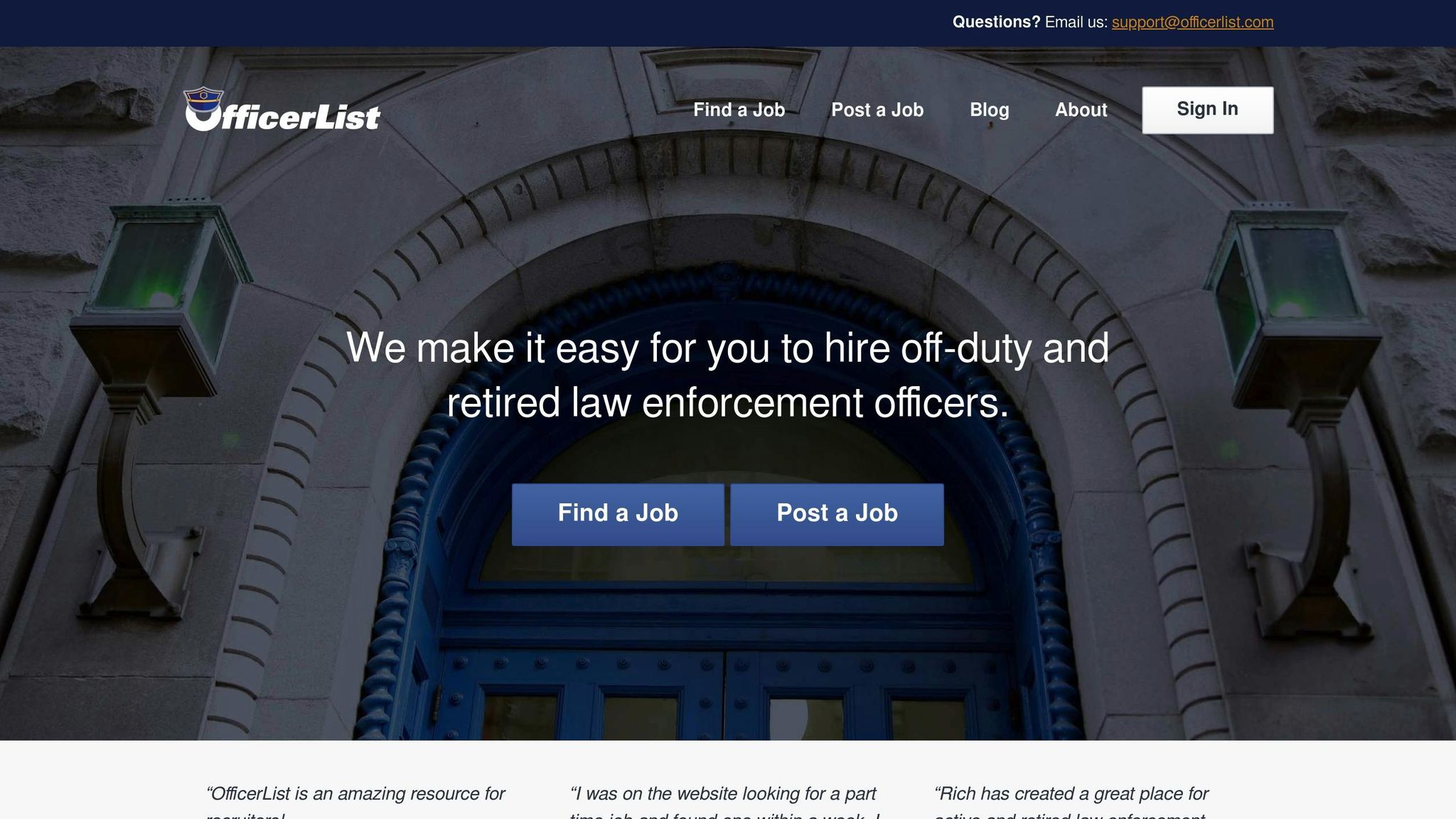
Building on LinkedIn’s extensive networking capabilities, integrating OfficerList into your job search strategy creates a powerful combination for retired officers. While LinkedIn connects you to a vast professional network, OfficerList adds a focused layer specifically tailored to the law enforcement community. Together, they offer a balanced approach to enhancing your career prospects.
OfficerList is a job marketplace designed exclusively for active and retired law enforcement officers. It offers features like industry-specific resumes, exclusive job listings, and a secure platform where verified officers can connect and explore opportunities. The platform’s one-click application process simplifies hiring for both candidates and employers, and its strong emphasis on privacy ensures that officers can search for jobs confidently without compromising their security.
"With OfficerList, I receive emails as soon as jobs are posted & for jobs that are specifically related to my field of interest." – Nick, Officer
For employers, OfficerList provides a pool of highly qualified candidates. As one recruiter shares:
"OfficerList is an amazing resource for recruiters! Candidates are experienced, respectful and 100% professional. I highly recommend for attracting the highest level of talent." – Leslye, Recruiter
To achieve the best results, retired officers can use LinkedIn and OfficerList together. Start by refining your LinkedIn profile to highlight your skills and experience, as outlined earlier. Then, turn to OfficerList for targeted job searches and exclusive opportunities tailored to your law enforcement background. The platform’s industry-specific resume feature ensures that your application resonates with employers who value your expertise.
This dual strategy has proven effective for many. Sergeant Jeffrey, a retired NYPD officer, shares his experience:
"I was on the website looking for a part-time job and found one within a week. I will highly recommend this website to all LEO’s." – Sergeant Jeffrey, Retired NYPD
Stay proactive by following organizations and influencers on LinkedIn to keep up with industry trends. Use LinkedIn’s job alerts and search filters to identify relevant openings. Simultaneously, keep an eye on OfficerList for specialized roles that align with your law enforcement experience.
Navigating today’s job market means adopting a digital-first mindset. With 97% of employers reviewing LinkedIn profiles and 70% researching candidates on social media during the hiring process, keeping your online presence updated isn’t just helpful – it’s essential.
LinkedIn, in particular, provides a powerful platform for showcasing transferable skills, connecting with industry professionals, and uncovering opportunities that often aren’t advertised. In fact, 80% of LinkedIn members believe professional networking is crucial for career success. This makes it a cornerstone for anyone transitioning into a new career, especially retired officers.
For law enforcement professionals, OfficerList adds another layer of support by offering job opportunities tailored to their unique skill sets. Combining LinkedIn’s expansive networking capabilities with OfficerList’s specialized focus creates a winning strategy for finding roles that align with your experience.
As Mike Bires, a former officer and social media manager, puts it:
"LinkedIn is the ultimate tool for networking police officers."
To maximize your chances of success, focus on building a strong professional brand on LinkedIn while actively engaging with your network. Studies show that you’re 10 times more likely to land a job when your application includes a referral. Meanwhile, platforms like OfficerList can help you tap into opportunities that specifically value your law enforcement background.
The key is consistent effort and strategic positioning. Keep your profiles updated, stay active online, and remember that many organizations now proactively search for talent through digital platforms. By combining these tools and approaches, retired officers can confidently transition into their next career chapter.
Retired law enforcement officers can effectively present their expertise on LinkedIn by emphasizing skills that translate well into civilian careers. Abilities like leadership, problem-solving, and crisis management are highly sought after across many industries. The key is to frame these skills in a way that resonates with non-law enforcement audiences. For instance, instead of saying "managing critical incidents", you might describe it as "leading teams in high-pressure environments."
To make the most of LinkedIn, focus on optimizing your profile. Incorporate keywords relevant to the roles you’re targeting, adjust your titles to align with civilian job expectations, and clearly highlight achievements that showcase your skills and impact. Building a strong professional network is just as important – connect with industry professionals, participate in relevant groups, and engage in meaningful conversations to broaden your opportunities.
By reshaping their experience to fit civilian contexts and actively networking, retired officers can position themselves as valuable candidates for a wide range of roles outside of law enforcement.
Retired law enforcement officers can effectively use LinkedIn to boost their job search by leveraging some of its most impactful tools. Start by crafting a well-rounded and professional profile – this means adding a clear, high-quality photo, writing an engaging "About" section, and including detailed descriptions of your skills and accomplishments.
Activate the ‘Open to Work’ feature to signal to recruiters that you’re available for new opportunities. Use LinkedIn’s job search filters to narrow down roles that align with your expertise, location, and interests. Joining industry-specific groups and networks can also help you connect with professionals in your target field, opening doors to valuable opportunities.
Additionally, explore LinkedIn Learning to pick up new skills or refresh existing ones to remain competitive in the job market. Finally, ask former colleagues for recommendations and endorsements – these can strengthen your profile and make it stand out to potential employers.
LinkedIn provides retired law enforcement officers with a powerful tool to discover career opportunities by emphasizing networking and building relationships over the traditional approach of scanning job boards or submitting direct applications. The platform enables officers to connect with a diverse group of professionals, join conversations in their fields of interest, and secure referrals that can lead to roles not publicly advertised.
By creating a comprehensive profile, retired officers can effectively highlight their skills and experience, increasing their visibility to potential employers. Moreover, engaging with the law enforcement community and sharing relevant insights allows them to cultivate a sense of camaraderie and establish connections that feel more personal and meaningful than the often impersonal nature of conventional job hunting.