
If you want a fully remote job after law enforcement, the best paths are fraud investigations, cyber incident response, and bank risk or compliance work. In this article, I break down which roles pay the most, which ones are the fastest to move into, and where police experience lines up best.
Here’s the short version:
I also cover the main job titles, pay ranges, hiring requirements, and how I’d compare each path by training time, fit, and income.
Quick Comparison
| Path | Common Roles | Typical Pay | Time to Pivot | Best Fit |
|---|---|---|---|---|
| Fraud / financial investigations | Fraud Investigator, Bank Fraud Investigator, Financial Crime Analyst | $60,000 to $180,000+ | Weeks to a few months | Officers with interview, case, and report-writing experience |
| Cyber / security operations | Incident Response Analyst, Incident Response Consultant, Security Operations Analyst | $65,000 to $160,000+ | Several months | Officers with digital crime, tech unit, or evidence-handling background |
| Risk / compliance / bank investigations | Bank Investigations Analyst, BSA/AML, risk roles | $75,000 to $120,000 | Several months | Officers who like documentation, review work, and escalation |
Bottom line: if I wanted the fastest remote move, I’d start with fraud. If I wanted a higher ceiling and didn’t mind training, I’d look at cyber. If I wanted a middle ground, I’d focus on compliance or bank investigations.
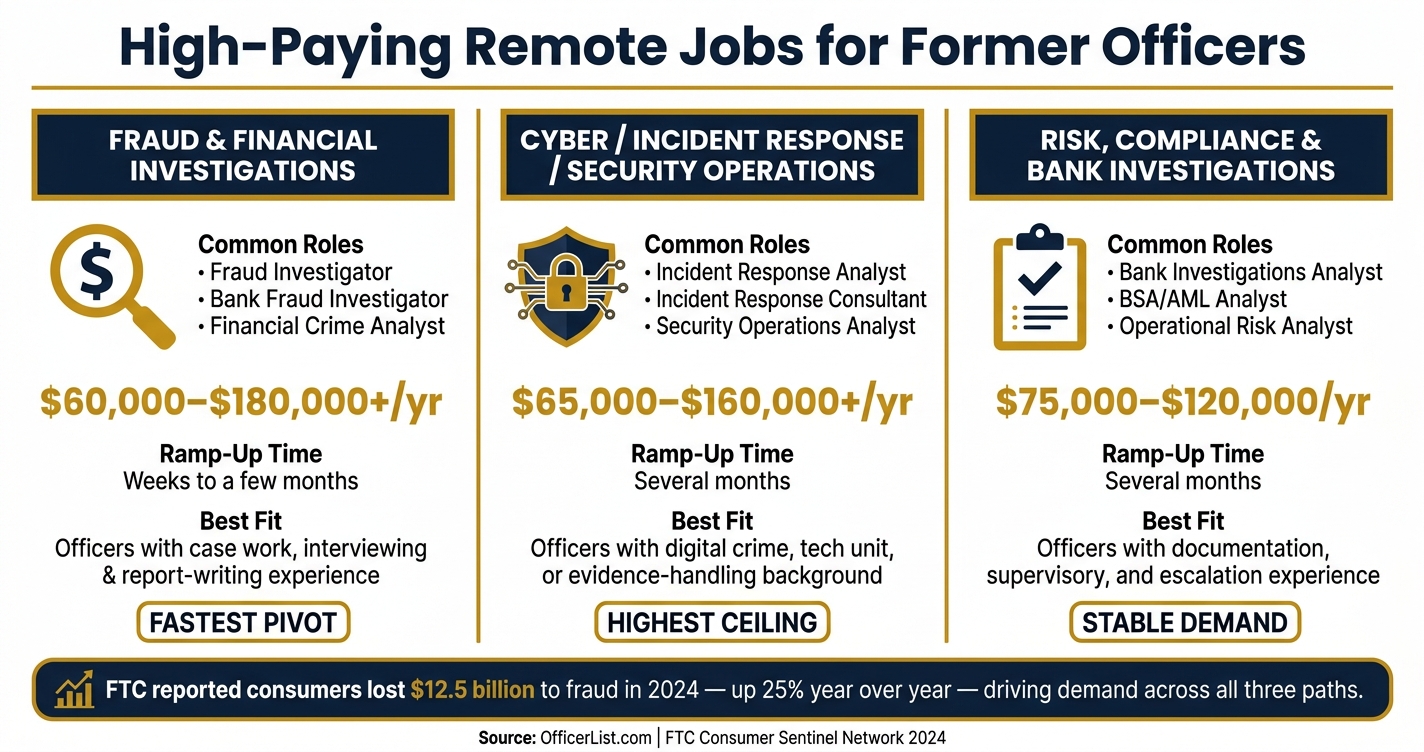
High-Paying Remote Jobs for Former Officers: Pay, Fit & Ramp-Up Time
Banks, fintechs, insurance carriers, and corporate investigations teams hire former officers for remote fraud work. And the demand makes sense. The FTC said consumers lost more than $12.5 billion to fraud in 2024, up about 25% year over year.
For former officers, this work often feels familiar fast. You’re still building cases, interviewing people, writing reports, and making calls when the facts aren’t clean.
At the day-to-day level, the work looks a lot like investigations work in law enforcement: review evidence, talk to people, and document what happened.
A fraud investigator at a bank or fintech usually reviews flagged transactions, opens cases in a case-management system, interviews customers or employees about disputed activity, and writes findings. A bank fraud investigator handles much of the same work, but the focus is tighter. These roles stay closer to products like checking accounts, credit cards, and loans, and they may also handle reimbursement decisions and escalations to law enforcement.
A financial crime analyst usually covers more ground. These analysts review transaction-monitoring alerts, look into suspicious patterns, and draft Suspicious Activity Reports (SARs) when needed. In fintech settings, they may also work with product and engineering teams to adjust fraud detection rules.
Pay can be strong, especially once you’ve got direct industry experience:
For a direct market example, one large bank listed a remote Fraud Investigator II role at $63,590–$121,530. Bank of America also posted a Global Financial Crimes Investigator role at $68,500–$100,000, plus incentive eligibility.
Most job postings ask for 2–5 years of investigative experience. Law enforcement experience is often accepted as a direct match, especially for officers who worked financial crimes, fraud, or other complex cases.
A bachelor’s degree in criminal justice, finance, or a related field is often preferred, but some employers will swap that out for solid experience. On the tools side, employers usually want people who can work in case-management systems, use basic data tools like Excel, and learn fraud-detection platforms without much hand-holding.
Writing matters a lot here. Case summaries and SARs need to stand up to legal and regulatory review, so clear documentation isn’t just nice to have. It’s part of the job. Certifications like the CFE (Certified Fraud Examiner) or AML-focused credentials may not be required for entry-level roles, but they matter more as you move into more specialized positions.
The biggest differences between these jobs usually come down to industry, pay ceiling, and how much AML knowledge the employer expects.
| Industry | Common Title | Typical Salary Range | Key Requirements |
|---|---|---|---|
| Banking | Bank Fraud Investigator | $70,000–$125,000/yr | Investigative experience, BSA/AML familiarity, strong writing |
| Banking/Fintech | Financial Crime Analyst | $60,000–$180,000+/yr | AML/SAR knowledge, transaction monitoring, CFE preferred |
| Insurance | Fraud Investigator / SIU (Special Investigations Unit) | $68,000–$115,700/yr | Claims investigation, interviewing, general investigative background |
| Corporate / general | Fraud Investigator | $50,000–$84,200/yr | Case management, documentation, coordination with legal/compliance |
Insurance and corporate roles are often the easiest entry point for officers who don’t yet have financial-services experience. Banking and fintech roles usually offer more upside on pay, but they also tend to expect more regulatory and technical knowledge. If you want a faster pivot, cyber and security operations roles are the next step.
If fraud roles feel a little too close to past investigations work, cyber can be a stronger next move. Pay is often higher, and the work leans more technical. It also rewards a few things former officers already do well: handling evidence, staying calm under pressure, and writing clear reports.
These jobs center on triaging alerts, looking into incidents, and documenting what happened. The big difference is the setting: an internal security team, a consulting firm, or a 24/7 security operations center.
| Role | Typical Employer | Pay Band | Key Requirement |
|---|---|---|---|
| Incident Response Analyst | In-house security team | $80,000–$130,000/yr | SIEM familiarity, documentation, shift availability |
| Incident Response Consultant | Cybersecurity consulting firm | $100,000–$160,000+/yr | Cross-client case handling, clean reporting, technical fluency |
| Security Operations Analyst | SOC / managed security provider | $65,000–$110,000/yr | Alert triage, escalation accuracy, on-call availability |
Most former officers need to build some technical knowledge before stepping into cyber-focused work, but the move is very doable. The path for retiring officers is fairly direct. Case review and report writing map well to alert triage, incident containment, and escalation.
What do employers usually want? A few core things:
Some roles also require a PI or security license, depending on the state.
The next step is figuring out which track fits best: incident response, consulting, or security operations.
If cyber work feels too technical, risk and compliance can be a better fit for officers who want remote investigative work without going deep into the technical side.
These roles keep former officers close to the kind of work they already know: case review, documentation, and escalation.
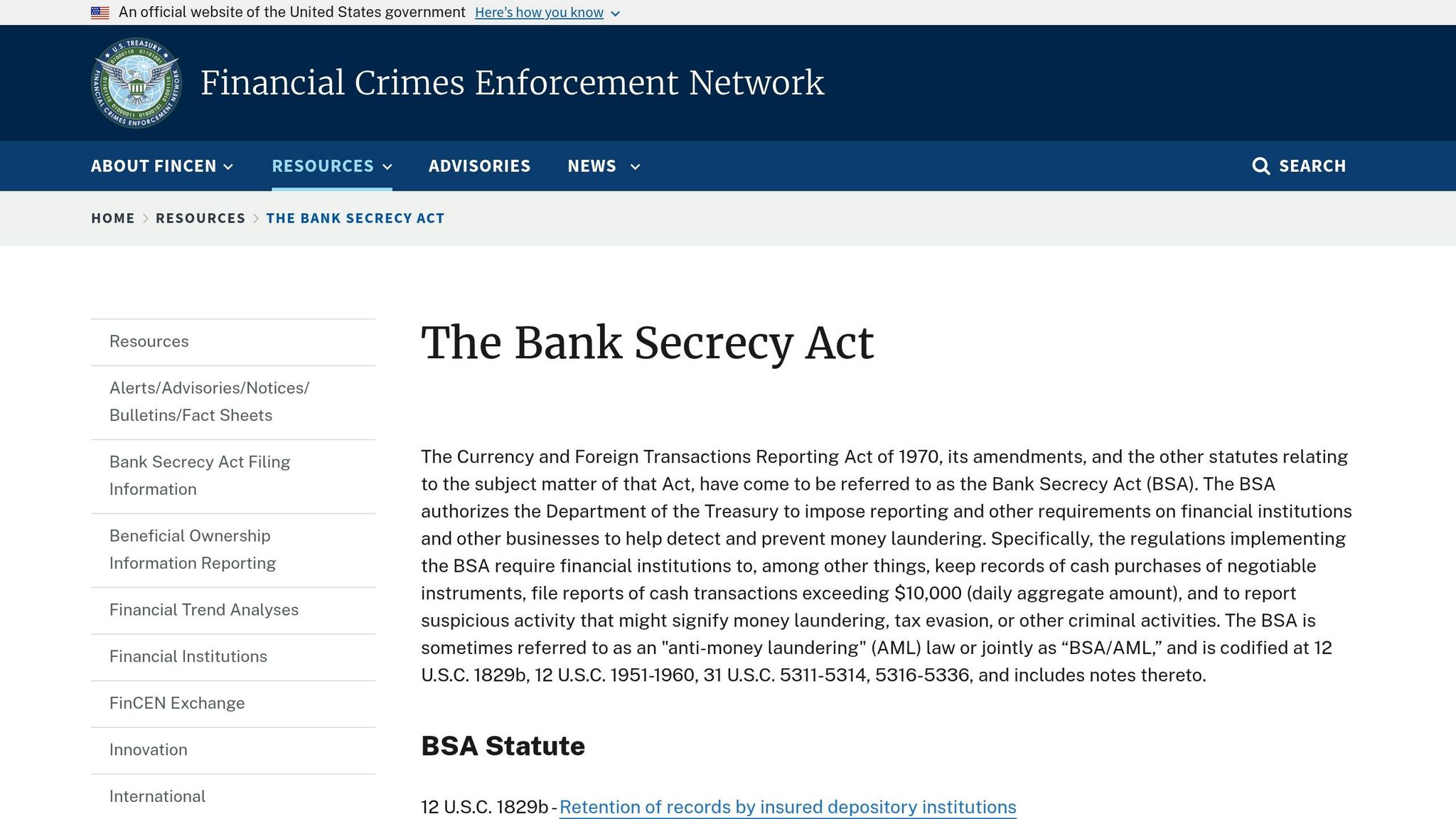
Bank investigations analysts review internal cases. BSA/AML teams monitor suspicious activity. Operational risk roles test controls and escalate failures.
The overlap with police work is pretty clear. These jobs reward the same habits officers use in the field: structured notes, evidence review, and knowing when something doesn’t add up.
SIU and detective experience tends to transfer well because these roles rely on evidence review, interviewing, and clear documentation.
For officers who want remote work without a long cyber ramp-up, banking and compliance roles are often the fastest move.
Once you’ve narrowed down your target role, the next move is simple: find employers that already hire former officers.

Former officers need employers that understand law-enforcement work. OfficerList helps you find those roles.
OfficerList is a job marketplace for active and retired law-enforcement officers, with verified job postings and resume tools that translate police experience into civilian terms. It also offers job alerts, which can help you spot remote openings before they’re gone.
From there, pick the path that lines up with your timeline and background.
The fastest way to compare your options is to look at three things: pay, ramp-up time, and fit.
| Role Type | Typical Pay Range (USD) | Ramp-Up | Best For |
|---|---|---|---|
| Fraud / financial investigations | $70,000–$110,000/yr | Weeks to a few months | Officers with case work and interview experience |
| Incident response / security operations | $85,000–$130,000+/yr | Several months | Officers with digital crime or tech unit background |
| Risk, compliance, and bank investigations | $75,000–$120,000/yr | Several months | Officers with documentation and supervisory experience |
Here’s the short version: fraud roles are usually the fastest move, incident response tends to pay more but takes more technical training, and risk or compliance roles often land in the middle.
Fraud and financial investigations are the most direct move for many former officers. The work lines up well with case handling, interviewing, report writing, and pattern spotting.
Incident response and security operations can lead to higher pay, but they usually ask for more technical learning up front. If you’ve worked digital crime, cyber, or a tech-focused unit, that path may make a lot of sense.
Risk and compliance roles sit between those two. They offer steady pay, stable demand, and a good long-term path for officers who’d rather work with policy, process, and documentation than hands-on casework.
Start with the role that fits your background best, then branch into nearby options as you build momentum. A profile on OfficerList can help you put your experience into civilian language and get in front of the right employers.
It depends on the role and the industry. Many high-paying remote jobs put more weight on your law enforcement background, leadership, and specialized skills than on a formal degree.
That said, employers may still look for certifications such as CPP, PSP, or CISSP. Some specialized or consulting roles may also require state-specific licenses or focused training.
If you have no cyber background, the best move is to build from the strengths you already have from law enforcement, like crisis management, investigations, and operational planning, and shift into roles such as physical security, surveillance, or risk assessment.
You can also use the OfficerList Police Career Transition Planner to look at paths that fit your experience, see which certifications or courses may help, and find roles that value the skills you already bring to the table while giving you space to grow.
Translate law enforcement experience into business-friendly language and tie it to clear results. For example, swap jargon like “SWAT commander” or “developed SOPs” for plain descriptions such as leading a high-risk response team or creating standard procedures that improved efficiency.
Put the spotlight on strengths that carry over well to business roles, like leadership, risk reduction, and asset protection. If it fits your situation, OfficerList can also help connect you with employers looking for that background.